Medically Reviewed by Dr. Ravinder Sharma, MS (Ayurveda), Chief Consulting Proctologist
Reading Time: 5 Minutes
Location Focus: Vasant Kunj, South Delhi, Gurugram, Noida
________________________________________
The “Corporate Boil”: Is Your Desk Job the Culprit?
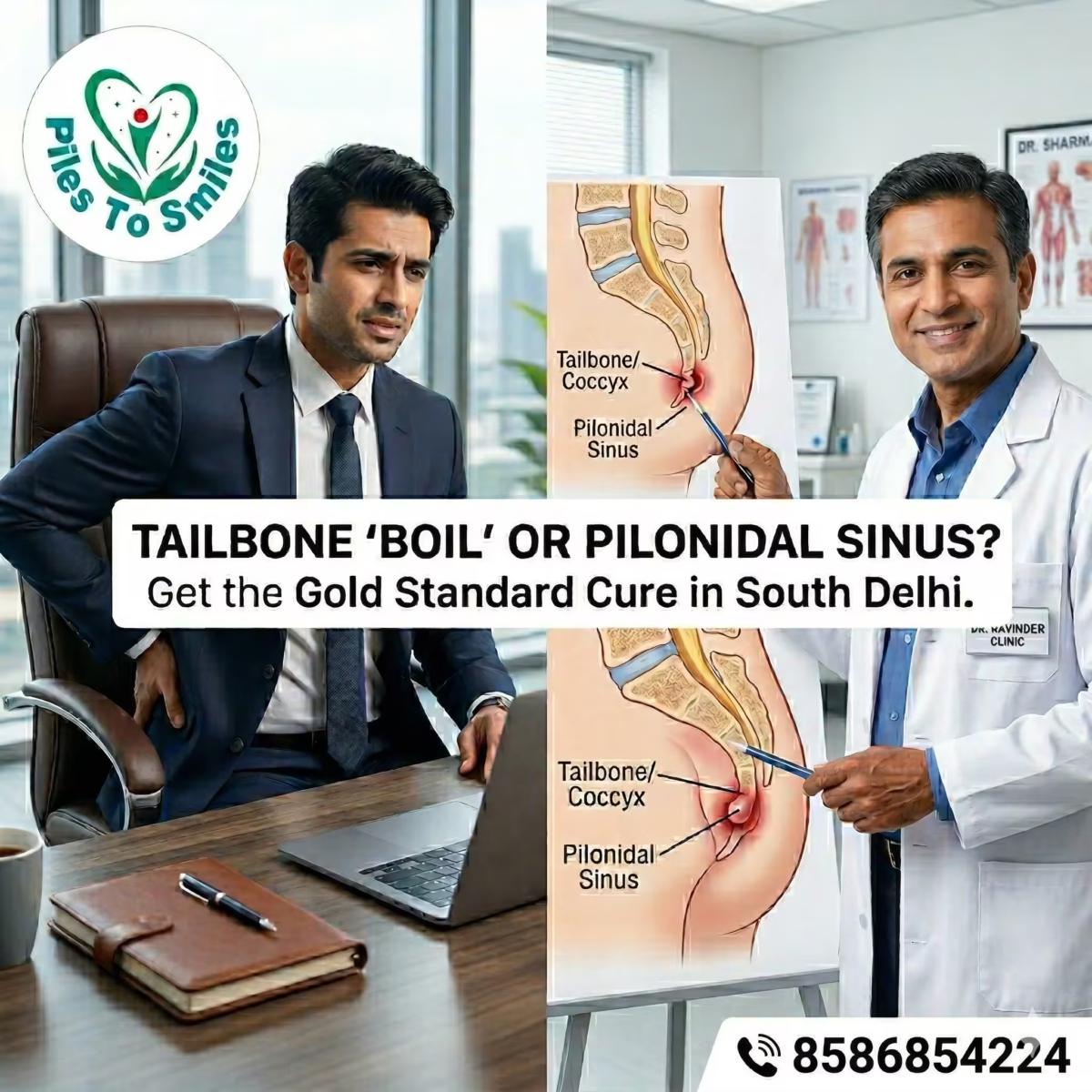
For professionals in Cyber City or Okhla, a painful lump at the base of the spine is often dismissed as a simple “gym injury” or heat boil. However, if you sit for 8+ hours a day and notice persistent swelling near your tailbone, you aren’t just dealing with a skin infection—you likely need a Pilonidal Sinus specialist in Delhi.
“From Stage 1 (painless ‘silent’ pits) to Stage 2 (acute ‘boil’ abscesses) and Stage 3 (chronic discharging tracks), the right clinical approach depends entirely on identifying your specific stage early.”
________________________________________
Is it a Simple Boil or a Pilonidal Sinus? (The Specialist’s Checklist)
Most patients attempt to “squeeze” or use over-the-counter ointments, thinking it’s a localized abscess. Here is how to tell the difference:
| Feature | Simple Skin Boil (Abscess) | Pilonidal Sinus (PNS) |
| Location | Anywhere on the body | Strictly at the Natal Cleft (top of buttock crack) |
| Appearance | Red, raised, and “ripening” | Often shows tiny “pits” or holes in the skin |
| Recurrence | Usually heals and never returns | Highly recurrent; clears up only to return weeks later |
| Contents | Just pus/infection | Pus mixed with ingrown hair and debris |
| Pain Level | Throbbing until drained | Deep, “aching” pain that makes sitting impossible |
While conventional ‘Wide Excision‘ involves large tissue removal, high recurrence, and weeks of bed rest, modern proctology favors approaches that preserve tissue and lifestyle.
________________________________________
The “Jeep Seat” Factor: Why Delhi-NCR is a Hotspot
Pilonidal Sinus is historically known as “Jeep Seat Disease.” In our local context, three factors make this region a hotspot:
1. The Sedentary Trap:
Long commutes from Noida to Gurugram create constant friction and sweat in the tailbone area.
2. The “Hirsute” Factor:
Deep natal clefts and thick hair growth (common in the North Indian demographic) increase the risk of hair embedding into the skin.
3. The Delhi Heat:
Excessive sweating leads to maceration of the skin, making it easier for hair to penetrate and form a “sinus” (a tunnel).
________________________________________
The Specialist’s Choice: When to Use Laser vs. Ksharsutra
As a Pilonidal Sinus specialist in Delhi, I stay at the forefront of both modern and traditional surgical techniques. Patients need to understand that the “best” treatment depends entirely on the clinical staging of their condition:
- For Stage 1 (Minor, Primary Pits): Laser (FiLaC) can be an effective, highly minimally invasive option. When the sinus is caught early, with no active infection or complex branching, laser energy can successfully seal the primary pit with virtually no downtime.
- For Stage 2 & 3 (Abscesses & Complex Tracks): In my clinical experience at Piles To Smiles, once a patient develops an active abscess or multiple discharging tracks, Ksharsutra remains my preferred gold standard.
Ksharsutra vs. Laser: Why the Medicated Thread Wins
| Feature | Laser Surgery | Ksharsutra (Medicated Thread) |
| Cleaning Mechanism | Seals track via heat; risk of debris being trapped. | Chemical debridement: continuously scavenges and cleans debris. |
| Success & Recurrence | Variable Success: Higher risk of recurrence in Stage 2/3 as surface closure can trap “dead space” or infection. | 98% Success Rate: Minimal recurrence risk as it forces the track to heal solidly from the base upwards. |
| Healing Direction | Top-Down: Focuses on surface closure, which can accidentally seal in underlying infection. | Base-Upwards: Ensures the entire tunnel is filled with healthy tissue before the skin closes. |
| Tissue Integrity | Surface Closure: Closes the opening but does not change the nature of the skin in the tailbone area. | Strengthening: Induces “controlled fibrosis,” making the area physically less susceptible to future hair penetration. |
In my South Delhi practice, I often see patients who have undergone laser elsewhere only to have the ‘boil’ return because the primary pits weren’t fully debrided. – Dr. Ravinder Sharma
________________________________________
The Piles To Smiles Advantage: Ksharsutra for Pilonidal Sinus
As a leading Pilonidal Sinus specialist in Delhi, I advocate for Ksharsutra (Medicated Thread Therapy). This is why our patients from South Delhi choose this over conventional surgery:
- No Hospitalization: It is an OPD-based, minimally invasive procedure.
- Back to Work: Most patients return to their desk jobs within 24–48 hours.
- Zero Recurrence: The medicated thread debrides the entire track, ensuring no hair or infected tissue remains.
- No Large Scars: We preserve the natural anatomy of the tailbone area.
________________________________________
When to Seek Urgent Consultation
If you reside in the Delhi-NCR area and notice these “Red Flags,” do not wait for the boil to “burst”:
 Pus or Blood staining your clothes.
Foul-smelling discharge from the tailbone area.
Fever or Chills (signaling a systemic infection).
Inability to sit for more than 10 minutes.
________________________________________
The Treatment Timeline: Your Journey to Permanent Healing
Your Pilonidal sinus treatment journey at Piles To Smiles follows a simple 3-step path:
- Precise mapping of the track,
- A 20-minute OPD procedure to place the Ksharsutra under local anesthesia, and
- Brief weekly Ksharsutra change sittings.
Healing time varies based on complexity; however, daily routines are rarely interrupted.
________________________________________
Post-Care & Prevention: Staying Sinus-Free
- Offload Pressure: Use a coccyx cushion.
- Hygiene: Keep the area dry; consider laser hair reduction.
- Movement: Move around for 2 minutes after every 45 minutes to boost circulation.
________________________________________
Verified Patient Testimonial
“I ignored a ‘pimple’ until it became an abscess. Other surgeons recommended 3 weeks of bed rest, which I couldn’t afford. Dr. Sharma’s Ksharsutra treatment had me back at my desk in 2 days. Highly recommended for professionals.” — Aditya K., Senior Architect, Gurugram
________________________________________
Clinical Perspective
Disclaimer: While wide excision is a standard surgical approach, our clinical experience shows that for active professionals, the minimally invasive nature of Ksharsutra offers a more practical recovery profile with significantly lower recurrence rates.
Expert Care in Vasant Kunj
Stop the cycle of recurring pain. At Piles To Smiles, we combine ancient Ayurvedic precision with modern surgical diagnostics to give you a permanent, gold standard Ayurvedic surgical alternative.
About Piles To Smiles:
Led by Dr. Ravinder Sharma, our Vasant Kunj clinic is a center of excellence for Ayurvedic Surgery. While we specialize in the 98% success rate of Ksharsutra for Pilonidal Sinus, we also provide expert care for complex Anal Fistula and Fissure cases using minimally invasive techniques.