Categories
Piles

Desk Job Piles: 5 Signs & Specialist Cure in South Delhi

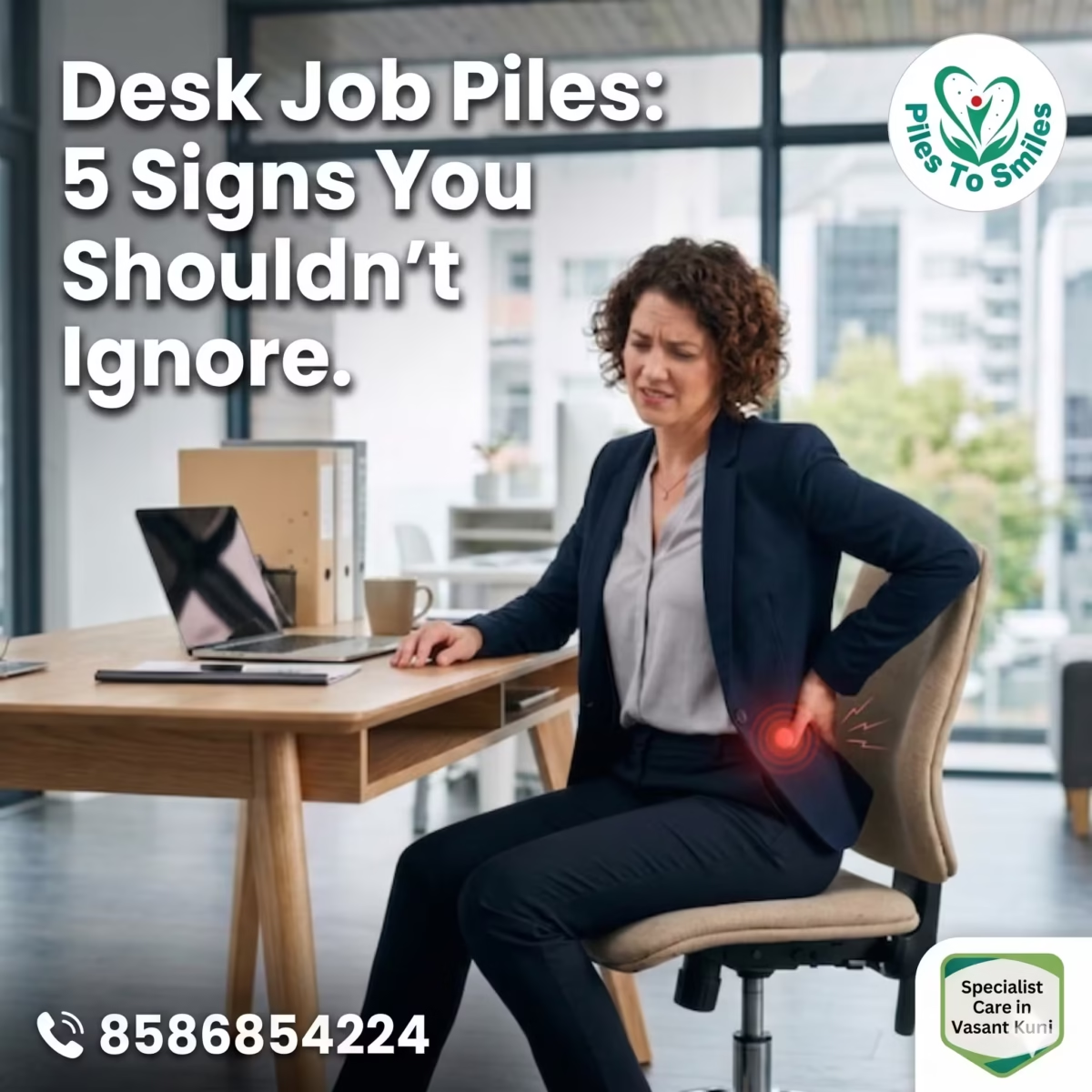
In the corporate corridors of Cyber City, Okhla, and Noida, a new health crisis is emerging: the “Sitting Disease”. While we often discuss back pain or eye strain, prolonged sitting for 8 to 10 hours a day is a leading contributor to hemorrhoidal disease. At Piles To Smiles in Vasant Kunj, I frequently consult with young professionals who are surprised to find that their desk-bound lifestyle has led to chronic rectal discomfort.

As an MS (Ayurveda) Surgeon with over 18 years of experience, I have seen how the pressure of a sedentary job causes blood to pool in the pelvic region, eventually leading to the swelling of rectal veins. If you are working in a high-pressure role in South Delhi, ignoring early symptoms can turn a manageable condition into a surgical necessity.
________________________________________

Sign 1: The “Persistent Itch”

Many professionals dismiss an occasional itch as a minor skin irritation or a result of tight clothing. However, in proctology, a persistent itch is often the first “Red Flag” of internal inflammation. When the veins begin to swell, they can secrete mucus that irritates the sensitive skin around the anus.

Sign 2: Bright Red Spots

Noticing bright red blood on the toilet tissue is a clear signal that the vein walls are under significant stress. In the early stages, this may be painless, leading many to delay seeking a Specialist Cure in South Delhi. However, early intervention with Kshar Karma at our clinic can often resolve this without invasive surgery.

💡 Doctor’s Tip: The 45/5 Rule & The Commuter’s Hack
“For every 45 minutes of sitting in your South Delhi office, stand and walk for 5 minutes. This simple movement ‘unpools’ the blood in the pelvic veins and can prevent Grade 1 piles from progressing into a surgical condition.” — Dr. Ravinder Sharma, MS (Ayurveda)

Many Delhi professionals spend 2+ hours daily navigating traffic without adequate hydration. This lack of water, combined with prolonged sitting, is a major contributor to chronic constipation and the development of piles. Ensure you keep a water bottle in your vehicle to keep your digestive system moving during long commutes.

Sign 3: The “Lump” Sensation

If you feel a small protrusion or “lump” while wiping or after sitting for a long shift, your condition may be progressing from internal to external. In a fast-paced environment like Cyber City, many ignore this until it becomes painful. This sensation indicates that the hemorrhoidal tissue is prolapsing—a clear sign that the structural support of the rectal veins is weakening.

Clinical Note: Hemorrhoid Staging

Understanding your “Stage of Hemorrhoids” helps determine if you need conservative care or a specialized procedure:

  • Grade 1: Internal swelling only; no protrusion.
  • Grade 2: Protrudes during bowel movements but retracts on its own.
  • Grade 3: Protrusion requires manual reduction (must be pushed back).
  • Grade 4: Permanent protrusion that cannot be reduced.

Dr. Sharma’s Advice: Reaching out at Grade 1 or 2 often allows us to resolve the issue with non-surgical Kshar Karma, preventing the need for more complex interventions later.

Sign 4: The 5:00 PM “Dull Aching”

Do you experience a heavy, throbbing, or dull ache in the lower rectal area that worsens toward the end of the workday? This is often a direct result of “gravity-induced pooling” from sitting all day. This aching often signals that internal cushions are becoming engorged.
In our Vasant Kunj practice, we see that addressing this at the “aching” stage often prevents the need for more complex Ksharsutra procedures later. For professionals in South Delhi, this discomfort can affect focus and productivity, yet it is often completely reversible with early clinical intervention.


⚠️ The Commuter Alert: Why Your 90-Minute Drive is Dangerous
Sitting in a car seat puts more static pressure on the rectal veins than sitting in an ergonomic office chair. The constant vibration and lack of movement during a long drive from Noida or Gurugram can exacerbate internal swelling. 

Dr. Sharma’s Advice: Use a thin, firm cushion to distribute weight and ensure you are hydrating before you hit the DND Flyway, MG Road, or the Gurgaon-Faridabad Road.”

Sign 5: Incomplete Evacuation

Feeling like you are ‘not done’ leads to straining—the primary enemy of rectal health. This sensation of fullness is often caused by swollen internal piles. Straining further engorges the veins, creating a vicious cycle that only a Specialist Cure in South Delhi can break.
________________________________________

Why Professionals Choose the Best Proctologist in South Delhi

In the competitive landscape of Cyber City and Noida, you need a solution that respects both your time and your health. As the leading Piles Specialist in Vasant Kunj, I have designed Piles To Smiles to bridge the gap between ancient Ayurvedic wisdom and modern executive needs.

Specialized Relief: Why Kshar Karma is the Professional’s Choice

For executives in Saket, South Extension, or Cyber City, a long hospital stay is not an option. At Piles To Smiles, I draw on my 18+ years of experience to provide a “Comfort Protocol” that bridges ancient Ayurvedic precision and modern corporate schedules.

  • Zero Bed Rest: Return to your boardroom or desk within 24–48 hours.
  • Discreet Care: Private consultations and executive scheduling ensure your medical journey remains entirely confidential.
  • Permanent Results: We don’t just mask symptoms; Kshar Karma neutralizes the hemorrhoidal mass at its base, virtually eliminating recurrence.

Stop the “Sitting Disease” Cycle

A desk job shouldn’t lead to a surgical crisis. Whether you are navigating the Gurgaon-Faridabad commute or a high-pressure role in Okhla, early intervention is key.

FAQs: Desk Job Piles & Specialist Care

Can sitting at a desk all day cause piles?

Yes. Prolonged sitting for 8–10 hours—common in corporate hubs like Cyber City, Okhla, and Noida—is a leading cause of hemorrhoidal disease. Constant sitting increases intra-abdominal pressure, causing blood to pool in the rectal veins. To mitigate this, Dr. Ravinder Sharma recommends the 45/5 Rule: stand and walk for 5 minutes for every 45 minutes of sitting.

The five early warning signs you should not ignore include:

  • Persistent Itching: Often the first sign of internal inflammation.
  • Bright Red Spots: Blood noticed on toilet tissue after bowel movements.
  • Lump Sensation: Feeling a protrusion while wiping, known as prolapse.
  • Dull Aching: A heavy sensation in the rectal area, especially by 5:00 PM.
  • Incomplete Evacuation: The feeling of not being “done,” which leads to harmful straining.

Yes. Kshar Karma is a specialized Ayurvedic para-surgical procedure that can resolve Grade 1 and Grade 2 piles without traditional invasive surgery. This treatment neutralizes the hemorrhoidal mass at its base, virtually eliminating recurrence while allowing patients to maintain their office routines in South Delhi.

For professionals in South Delhi, Vasant Kunj, and Saket, an MS (Ayurveda) Surgeon specializing in minimally invasive proctology is highly recommended. At Piles To Smiles, Dr. Ravinder Sharma offers a “Comfort Protocol” specifically designed for executives, featuring zero bed rest and a return to work within 24–48 hours.

Sitting in a car seat during long commutes from Noida or Gurugram puts more static pressure on rectal veins than an ergonomic office chair. This, combined with dehydration during 90-minute drives on the DND Flyway or MG Road, exacerbates internal swelling. Using a thin, firm cushion and staying hydrated can help manage these symptoms.
Categories
Fistula

Failed Fistula Laser Surgery? Why Ksharsutra is the Permanent Cure

The “Broken Promise”: Dealing with Recurring Fistula

There is nothing more discouraging for a patient than undergoing a high-tech laser procedure, only to see the familiar pain and pus return just a few months later. At our Vasant Kunj clinic, I often meet patients from across South Delhi who feel they have “tried everything,” yet their Anal Fistula persists.

If you are dealing with a recurrence, it is rarely due to your body’s inability to heal. Instead, it is often because the treatment addressed the symptoms rather than the source.

The Specialist’s Perspective: While Laser surgery is marketed for its “modern appeal,” it often fails in complex or chronic cases because it merely seals the track.

As an MS (Ayurveda) Surgeon, I specialize in Ksharsutra (Medicated Thread Therapy) — a gold-standard technique that cleanses the track from the inside out. In this guide, we explore why modern surgeries often fall short and why patients across Delhi-NCR are turning to Piles To Smiles for permanent recovery.

________________________________________

Why Laser Often Fails vs. Why Ksharsutra Succeeds

To understand why a fistula keeps coming back, we have to look at the Cryptoglandular source—the “infection factory” located in small pockets (crypts) inside the anal canal.

1. Shutting Down the “Factory”

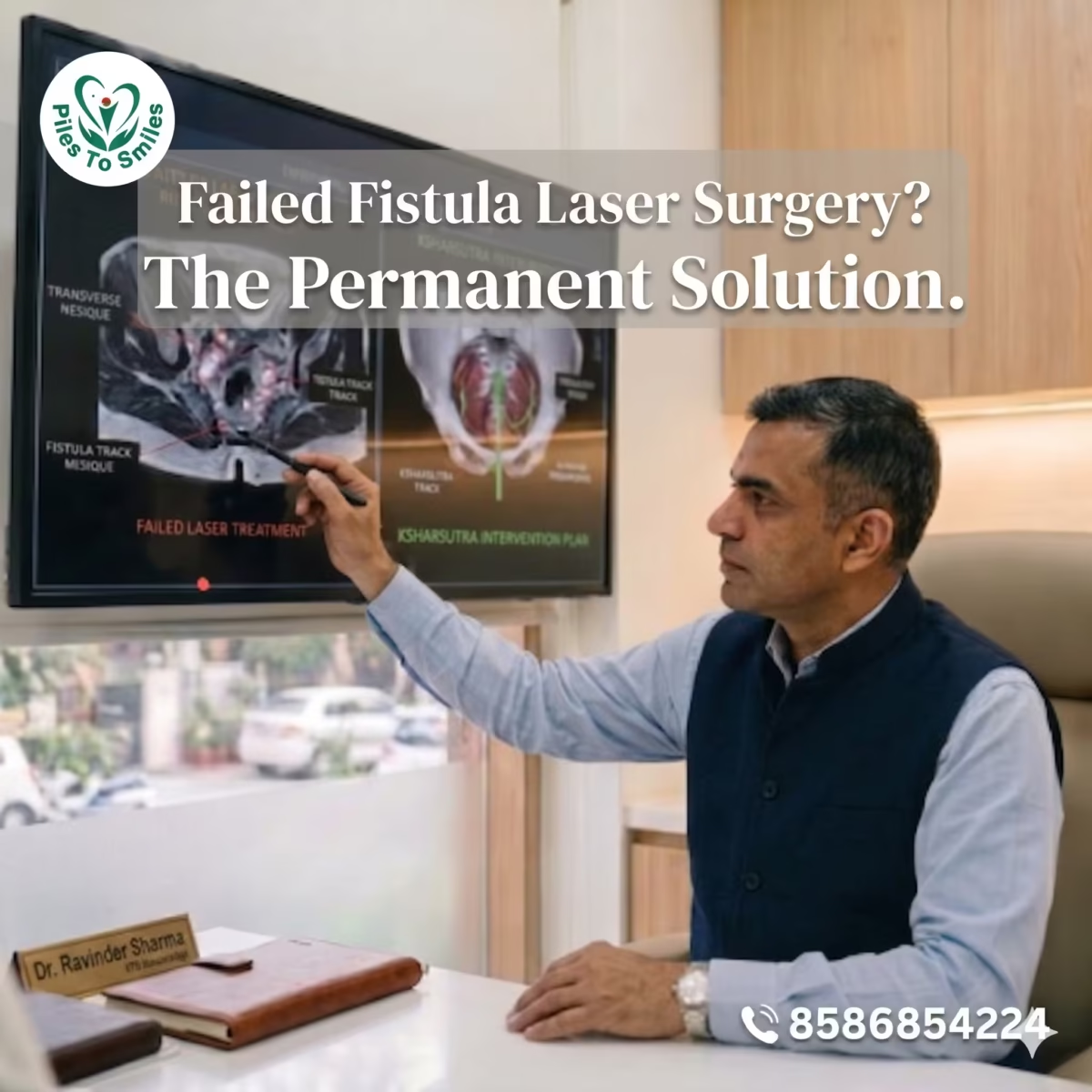
Laser surgery is often a “straight-line” treatment. While it effectively seals the visible tunnel (the track), it often fails to neutralize the infected crypt at the source. If the “factory” isn’t shut down, the infection simply tunnels a new path to the surface. Ksharsutra uses a medicated thread to provide sustained, chemical debridement of these crypts, ensuring the source of the infection is completely obliterated.

The “Chemical Micro-Surgeon”: Herbal Components 

This chemical action is powered by a specialized coating of medicinal herbs on the thread, each serving a vital surgical purpose:

  • Snuhi Ksheer (Euphorbia neriifolia): Gently debrides unhealthy tissue while keeping healthy muscle intact.
  • Apamarga Kshara (Achyranthes aspera): Performs “chemical cauterization” to neutralize infected crypts and eliminate dead space.
  • Haridra (Curcuma longa): Provides powerful anti-inflammatory and antimicrobial protection during healing.

2. The “Iceberg” Effect & Eliminating Dead Space

An Anal Fistula is rarely a single, straight line; it often has “off-shoot” branches hiding deep in the tissue—like the hidden bulk of an iceberg.

  • The Laser Risk: By “welding” the main track shut, lasers can trap residual bacteria in secondary branches. This creates “Dead Space” where an internal abscess forms, eventually bursting through the scar tissue.
  • The Ksharsutra Advantage: The medicated thread acts as a continuous surgical drain. It keeps the track slightly open while the medicine works, ensuring every bit of pus and debris is drained out as the track heals from the base upward. There is no “dead space” for bacteria to hide.

3. The “GPS” Precision of MRI

At Piles To Smiles, we don’t guess—we map. For recurring cases, I utilize MRI Fistulograms to identify every secondary branch. This allows us to place the Ksharsutra with 100% accuracy, ensuring even the most complex “iceberg” tracks are addressed.
________________________________________

Real Results: From Recurring Pain to Permanent Healing

“After two failed laser surgeries in Delhi, I thought my fistula was permanent. Dr. Sharma’s Ksharsutra treatment finally stopped the cycle. I’ve been recurrence-free for over a year.” — Anonymized Patient (Software Consultant), Gurugram

________________________________________

Comparison—Laser vs. Ksharsutra for Complex Fistula

When dealing with a recurrence, you need a method that prioritizes completeness over speed. Here is how the two primary options in Delhi-NCR compare:

FeatureLaser Surgery (FiLaC)Ksharsutra (Medicated Thread)
ActionUses heat to seal the track.Medicated action cleanses & cuts.
Infection ControlRisk of trapping bacteria inside.Continuous drainage of pus.
Healing DirectionSurface to Internal (Risk of pockets)Base to Surface (Solid healing)
Complex TracksMay miss secondary branches.Navigates & debrides all branches.
Recurrence Rate20-40% in complex cases.Less than 1-2%
HospitalizationUsually requires 1-2 days.OPD Procedure (Go home same day).
Muscle SafetyHigh (Non-cutting).High (Gradual, controlled release).

Superior Muscle Safety: The “Slow-Motion” Advantage

One of the greatest fears with fistula surgery is incontinence (loss of bowel control). Unlike traditional “open” surgery where muscles are cut quickly—risking permanent damage—Ksharsutra uses a “slow-motion” cut-and-heal process.

As the medicated thread gradually passes through the tissue, it heals the muscle behind it simultaneously. This ensures the structural integrity of the anal canal is preserved, making it the safest choice for complex or high-anal cases where muscle preservation is the top priority.

The “Comfort Protocol”: Is Ksharsutra Painful?

We use refined, pH-balanced threads and precise placement to minimize the “stinging” sensation. Post-procedure discomfort is managed with soothing Ayurvedic oils like Jatyadi Tailam. Most patients describe the sensation as manageable pressure rather than acute surgical pain.
________________________________________

Is Your Fistula a “Red Flag” Case?

If you’ve already experienced a failed surgery, watch for these signs:

  • Multiple Openings: New “holes” appearing near the original site.
  • Persistent Discharge: Foul-smelling pus that never fully stops.
  • Recurring Fever: A sign that the infection is becoming systemic.

Dr. Sharma’s Advice: “A recurring fistula is a progressive disease, and the stakes rise with every unsuccessful intervention. Each failed surgery leaves behind dense scar tissue and distorted anatomy, which significantly increases the chances of future surgeries failing. Ksharsutra is the specialized ‘cleanup’ tool required to break this cycle when high-tech promises fall short.”

________________________________________

Consulting the Best Fistula Surgeon in South Delhi for Recurrence

When a primary surgery fails, the clinical complexity of the case increases significantly. This is why patients from Saket, South Extension, and Hauz Khas seek specialized expertise rather than general surgical options. As an MS (Ayurveda) in General Surgery with over 18 years of experience, I have dedicated my career to mastering the nuances of complex anorectal conditions.

At Piles To Smiles, we specialize in “Red Flag” cases that modern laser centers often struggle to resolve. Our clinic is recognized for providing the highest standard of Ayurvedic Surgery in Vasant Kunj, combining ancient para-surgical techniques like Ksharsutra with modern clinical mapping to ensure the infection factory is shut down for good.

We have designed our practice to meet the needs of the busy Delhi-NCR professional:

  • Strategic Accessibility: Our clinic is conveniently located for patients commuting from South Extension or Saket, and offers a seamless route for those coming from Cyber City via the Gurgaon-Faridabad Road.
  • OPD-Based Recovery: We provide specialized care as an OPD procedure, meaning you drive in for your session and return home the same day—no hospitalization required.
  • Zero Bed Rest: Our protocols allow you to return to work within 24–48 hours and resume daily routines, including walking and climbing stairs, immediately.

________________________________________

Stop the Cycle of Recurrence

Don’t settle for temporary fixes. At Piles To Smiles, we combine surgical precision with the time-tested wisdom of Ayurveda to ensure your fistula is gone for good.

FAQs about Recurring Fistula & Ksharsutra

Why did my fistula return after laser surgery (FiLaC)?

Laser surgery (FiLaC) often fails in complex cases because it primarily seals the surface track. If the ‘infection factory’ (internal crypt) or secondary branches—the iceberg effect—are not addressed, the infection will eventually tunnel a new path. At our Vasant Kunj clinic, we use Ksharsutra to ensure these deep-seated pockets are chemically debrided and cleared permanently.

Yes. While laser is marketed for speed, the recurrence rate for complex fistulas is significantly lower with Ksharsutra (less than 1-2%). Ksharsutra acts as a medicated drain, ensuring the track heals from the base upward without trapping bacteria in ‘dead spaces,’ which is the primary cause of laser failure in Delhi-NCR patients.

For recurring cases, you need a specialist in complex anorectal mapping. Dr. Ravinder Sharma (MS Ayurveda) at Piles To Smiles specializes in ‘Red Flag’ cases. With over 18 years of experience, he combines MRI Fistulograms with the precision of Ksharsutra to achieve a near-zero recurrence rate for patients in Saket, South Extension, and Vasant Kunj.

Zero bed rest is required. One of the biggest advantages for Delhi-NCR professionals is that Ksharsutra is an OPD procedure. Most of our patients from Cyber City (Gurugram), Okhla, and South Extension return to their desk jobs within 24–48 hours and can resume light walking immediately.

Absolutely. Piles To Smiles is strategically located in Vasant Kunj, South Delhi, easily accessible via the Gurgaon-Faridabad Road (20 mins from Cyber City) and well-connected to Noida via the Outer Ring Road and Metro. Since the treatment is OPD-based, you can drive in for your session and return home the same day.

Book Appointment