
Don’t let the discomfort of piles disrupt your life. At Piles To Smiles in Vasant Kunj, we provide specialized, permanent relief from hemorrhoids using internationally recognized para-surgical standards. By merging ancient Ksharsutra therapy and Kshar Karma with modern clinical diagnostics, we ensure a predictable cure without conventional open surgery.
Anorectal conditions present differently depending on the root pathology. Review the clinical symptoms below to better understand your condition and explore our specialized, non-surgical treatment pathways.
A soft lump or tissue mass protruding during defecation.
Sensation of incomplete bowel evacuation or local fullness.
Persistent or recurrent pus, yellowish fluid, or bloody discharge.
Recurrent, painful swelling or boil-like abscess near the anus.
Chronic skin irritation, itching, and localized low-grade fever.
Sharp, severe, “glass-like” cutting pain during or after stool.
Tightness or intense throbbing spasms in the anal sphincter.
Minor streaks of bright blood on toilet tissue or hard stools.
Painful swelling, dimple, or small opening at the base of the spine.
Discharge of foul-smelling pus or blood near the tailbone area.
Severe discomfort when sitting, driving, or performing exercises.
Hemorrhoids are naturally occurring vascular cushions made up of blood vessels, connective tissues, and smooth muscles located within your anal canal. Everyone possesses these cushions; they serve a vital physiological function by maintaining fecal continence and ensuring no liquid leaks from the anal opening.
Clinical issues arise when chronic stagnation of blood causes these vessels to enlarge, swell, and stretch. This pathology manifests as painless bleeding or a physical mass protruding during bowel movements. Anatomically, these prominent hemorrhoidal plexuses are consistently situated at the 3 o’clock, 7 o’clock, and 11 o’clock positions, making piles most prevalent at these exact points.
Historically, symptomatic piles were most commonly diagnosed in individuals between the ages of 45 and 65. However, due to rapidly evolving modern lifestyles characterized by prolonged desk-sitting, a lack of regular physical exercise, and dietary habits deficient in natural fiber, we frequently treat piles at much younger ages. Recent clinical surveys indicate that roughly 50% of adults experience active symptoms related to piles by the age of 50 years.
Applying excessive pressure to the lower rectum during bowel movements overstretches and weakens the sensitive vascular cushions.
Spending long periods seated on the toilet forces the anal sphincter to relax deeply, causing blood to pool heavily in the local blood vessels.
Passing dry, hard stools exerts intense mechanical friction against the rectal walls, forcing patients to strain and pool blood in the canal.
The physical weight of the baby, combined with acute hormonal shifts and systemic constipation, causes 25% to 35% of pregnant women to develop piles during the third trimester or post-delivery.
Hemorrhoidal symptoms progress from mild internal bleeding to permanent external protrusion. Understanding your exact presentation helps us map out the precise care pathway you need.
Stage 1 (Bleeding Only): You notice streaks of bright red, painless blood on the toilet tissue or dropping into the pan during bowel movements. No tissue leaves the anal opening.
Stage 2 (Intermittent Prolapse): A soft tissue mass pushes outside the anal opening during straining or passing stool, but it automatically returns inside on its own once you relax.
Stage 3 (Manual Reduction Required): The pile mass protrudes during defecation and stays outside. You have to physically push it back inside with a finger. It causes a constant feeling of local fullness.
Stage 4 (Permanent Prolapse): The hemorrhoidal tissue remains permanently outside the anal opening and cannot be pushed back in. This stage is frequently accompanied by a heavy, mucous discharge and chronic skin irritation.
Perianal Skin Tags: Hard or soft raised lumps around the anal rim that make local hygiene difficult and cause persistent itching, chafing, and general discomfort.
Acute Thrombosed Piles (Emergency Signs): A sudden, firm, purple or dark bluish lump that appears overnight. This happens when a localized blood clot forms inside an external vessel cushion. It causes a severe, sharp, throbbing pain that makes sitting, walking, or passing stool almost impossible.
Note: While a thrombosed pile represents a painful emergency flare-up, our clinic specializes in a highly effective, non-surgical medical model to decompress the vascular pressure rapidly without aggressive open surgery.
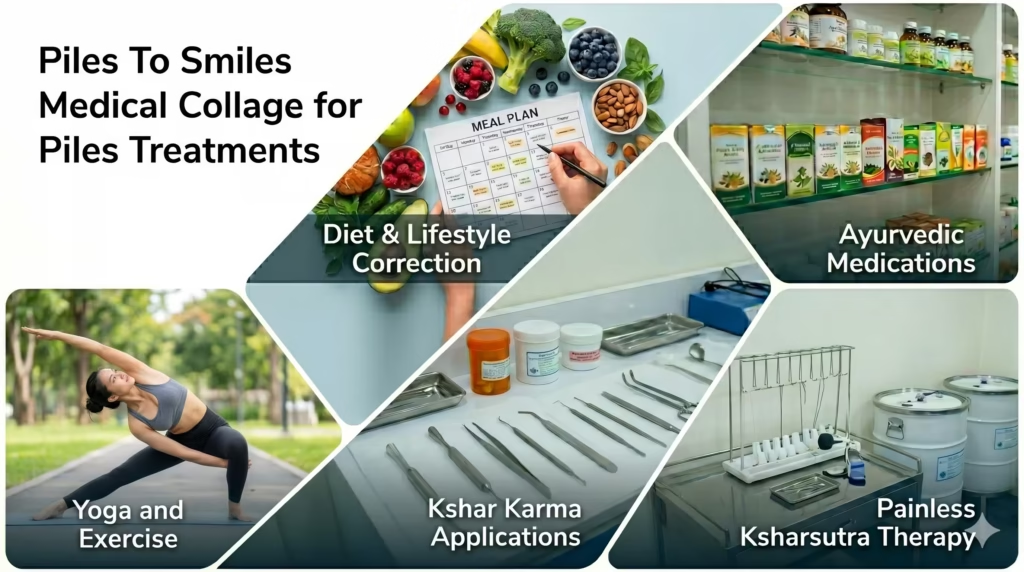
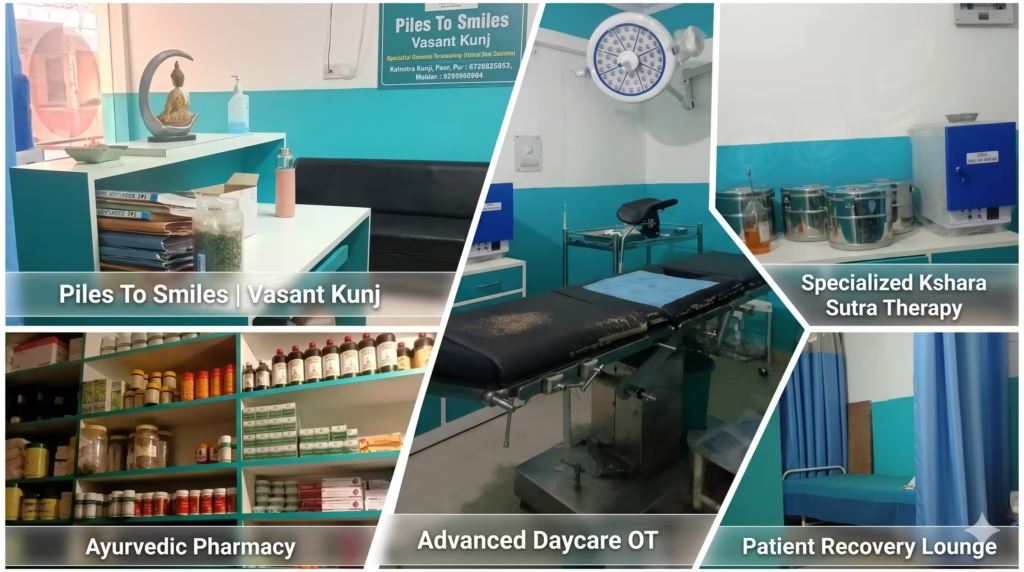
Explore our proven, minimally invasive Ayurvedic surgical pathways designed to eliminate internal and external hemorrhoids permanently without the trauma or prolonged recovery of conventional open surgery.
At Piles To Smiles, we realign our clinical interventions directly with the staging of your internal piles to guarantee a predictable cure with near-zero recurrence:
Grade 1 & 2 Internal Piles (Kshar Karma): For early-stage bleeding cushions, we deploy targeted Kshar Karma. Utilizing a specialized anoscope, a localized, highly precise application of an alkaline Ayurvedic formulation is applied directly to the pile mass. This gently cauterizes the bleeding vessels, causing the mass to shrink completely without incisions, open wounds, or lifestyle downtime.
Grade 3 & 4 Internal Piles (Advanced Ksharsutra Ligation): When hemorrhoidal tissues prolapse permanently or require manual reduction, Ksharsutra is the global clinical standard. A specialized, medicated herbal thread is precisely ligated around the root of the pile mass under local anesthesia. This simultaneously cuts off the blood supply while delivering localized healing agents. The devitalized mass naturally sloughs off within 7 to 10 days, leaving a clean, healthy healing bed.
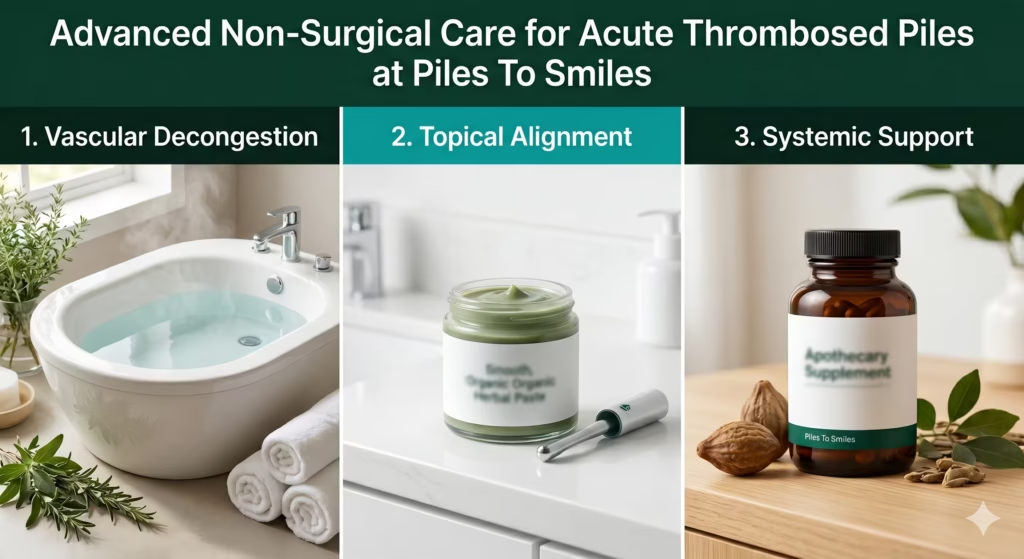
An acute thrombosed hemorrhoid occurs when a localized blood clot forms inside a painful external or internal pile pocket, causing a sudden, firm, bluish swelling at the anal opening. While this condition causes severe, constant, throbbing pain, aggressive open conventional surgery is absolutely not required to treat thrombosed piles.
At our Vasant Kunj facility, we manage acute thrombosis using a highly effective, conservative medical model:
Long-term freedom from hemorrhoidal disease requires correcting the underlying digestive root causes. Implement these clinical home practices alongside your specialized care.
Fiber Aggression: Transition to a diet rich in natural fibers by incorporating seasonal fruits, green leafy vegetables, and raw salads into every meal to naturally optimize stool volume.
Fluid Optimization: Increase your liquid intake significantly. Prioritize consuming plenty of clean water and fresh, traditional butter milk, which actively cools and lubricates the intestinal tract.
Constipation Eradication: Constipation is the primary mechanical trigger for piles. Never ignore natural urges, and avoid straining on the toilet seat.
Active Motility: A sedentary lifestyle slows down intestinal peristalsis. Commit to light daily physical exercise, such as 30 minutes of brisk walking, running, or dedicated yoga postures, to keep the colon moving.
Natural Stool Softeners: If you encounter temporary digestive dryness, utilize mild Ayurvedic supplements like Triphala powder or Haritaki powder before bed to ensure smooth morning evacuation.
Sphincter Toning: Practice targeted pelvic floor exercises such as Ashwini Mudra (Mula Bandha) under guidance to optimize local blood circulation and strengthen the supportive anal sphincter muscles.
The primary objective of Ayurvedic proctology is to deliver a definitive resolution that prioritizes patient safety, minimizes tissue trauma, and systematically corrects the underlying metabolic errors to prevent disease recurrence. By precisely integrating modern diagnostic standards with time-tested para-surgical principles like Kshar Karma and Ksharsutra Ligation, these specialized daycare protocols offer a highly predictable, clinically sound alternative to conventional open surgery.
Anorectal emergencies can become overwhelming rapidly. If you are experiencing intense bleeding, severe localized swelling, or sudden, painful thrombosis, skip the online forms. Your message goes directly to our frontline clinical team to help fast-track your priority scheduling.
Piles, clinically known as hemorrhoids, are naturally occurring vascular cushions made up of engorged blood vessels, smooth muscles, and connective tissues located within the anal canal. When chronic pressure or blood stagnation causes these sensitive rectal veins to stretch, swell, and dilate, they manifest as symptomatic piles that cause painless bleeding or physical tissue protrusion during bowel movements.
The primary reason for the engorgement of rectal blood vessels is increased intra-abdominal pressure that forces blood to pool in the anal canal. The most common clinical triggers include:
Yes, individuals can suffer from piles at 20 years of age. While hemorrhoidal disease was historically common in older demographics between ages 45 and 65 due to natural muscle laxity, modern lifestyle shifts have changed these demographics. Today, an increasing number of young adults in Delhi develop piles due to low-fiber diets, lack of physical exercise, and prolonged sitting.
A diagnosis of piles at the 3 o’clock position refers to the precise anatomical location of the swollen hemorrhoidal cushion, mapped out using the visual orientation of a standard clock face. Anatomically, the primary internal hemorrhoidal plexuses are consistently situated at three distinct coordinates around the anal rim: 3 o’clock, 7 o’clock, and 11 o’clock.
No single piles position is more dangerous than the others. The 3 o’clock, 7 o’clock, and 11 o’clock classification is strictly a descriptive diagnostic tool utilized by proctologists to locate the tissue mass for precision treatment. The severity of your condition depends entirely on the clinical stage of the internal prolapse (Grades 1 to 4) or acute complications like thrombosis, not its clock position.
Piles can only be treated with injections (sclerotherapy) if the disease is diagnosed in its earliest stages, specifically Stage 1 or early Stage 2 internal piles. Sclerotherapy involves injecting a chemical sclerosing agent directly into the vascular cushion to shrink it. However, for advanced Stage 2, Stage 3, or Stage 4 piles where permanent tissue prolapse has occurred, injection therapy has no clinical role and will not provide a permanent cure.
Yes, piles can be treated completely without conventional open surgery across all four stages using specialized Ayurvedic para-surgical daycare procedures. At our clinic, early Stage 1 and Stage 2 piles are managed non-incisionally via specialized Kshar Karma, while advanced Stage 3 and Stage 4 prolapsed piles are treated using the globally recognized Ksharsutra Ligation protocol.
Kshar Karma is a specialized, non-surgical Ayurvedic daycare treatment designed for Stage 1 and early Stage 2 bleeding internal piles. During this procedure, a trained proctologist utilizes a specialized anoscope to apply a localized, highly precise alkaline medicine (Kshar) directly to the internal pile mass. This formulation instantly relieves vascular congestion, safely cauterizes the bleeding vessels, and causes the mass to shrink completely without any open surgical incisions.
Ksharsutra treatment is a minimally invasive Ayurvedic para-surgical protocol indicated for advanced Stage 3 and Stage 4 internal piles, as well as complex external variations. It involves precisely ligating a specialized, medicated herbal thread around the root of the hemorrhoidal mass under local anesthesia. The therapeutic agents chemically embedded in the Ksharsutra systematically block the localized blood supply, causing the devitalized pile mass to naturally slough off within 7 to 10 days, leaving a healthy healing bed without stitching.
Ayurvedic para-surgical treatment is widely considered a superior clinical alternative to modern conventional surgery because it preserves healthy surrounding tissues and prevents structural damage to the anal sphincter muscles. Traditional open hemorrhoidectomy involves aggressive tissue cutting, which can lead to severe post-operative pain, long hospital stays, and risks of fecal incontinence. In contrast, Ksharsutra ligation works through simultaneous mechanical cutting and localized chemical debridement, resulting in minimal trauma, a predictable near-zero recurrence model, and no requirement for prolonged hospitalization.
The cost of Ksharsutra treatment for piles in Delhi varies depending on the clinical staging of the hemorrhoids (Grade 1 to Grade 4), the complexity of the vascular cushions involved, and the specific daycare facilities required. Because Ksharsutra is performed on a walk-in, walk-out basis under local anesthesia, it eliminates expensive major operating theater fees, prolonged hospitalization costs, and heavy anesthesiologist charges, making it a highly cost-effective treatment model compared to conventional surgical alternatives.
You can access advanced, non-surgical and minimally invasive piles treatment in South Delhi at Piles To Smiles, located in Vasant Kunj. Led by Chief Consulting Proctologist Dr. Ravinder Sharma, MS (Ayurveda) in General Surgery, the center specializes in cutting-edge daycare models like Kshar Karma and Ksharsutra ligation, offering permanent relief to patients across Delhi NCR without conventional open surgery.
Dr. Ravinder Sharma, MS (Ayurveda) in General Surgery, is recognized as a leading specialist for advanced Ayurvedic proctology and non-surgical piles care in Vasant Kunj, South Delhi. As the Medical Director of Piles To Smiles, he leverages over 18 years of clinical expertise to deliver highly predictable, near-zero recurrence outcomes for Piles, Fissure, Fistula, and Pilonidal Sinus.
© 2026 Piles To Smiles | All Rights Reserved | Privacy Policy | Developed by Wand Weaver
WhatsApp us
